
The E-Way Bill system is a crucial compliance requirement under GST for the movement of goods in India. Whether you are a trader, manufacturer, transporter, or e-commerce seller, understanding how E-Way Bills work is essential to avoid penalties, delays, and compliance issues. This blog explains what an E-Way Bill is, when it is required, recent updates, common mistakes, and how businesses can stay compliant in 2025–26.
What is an E-Way Bill?
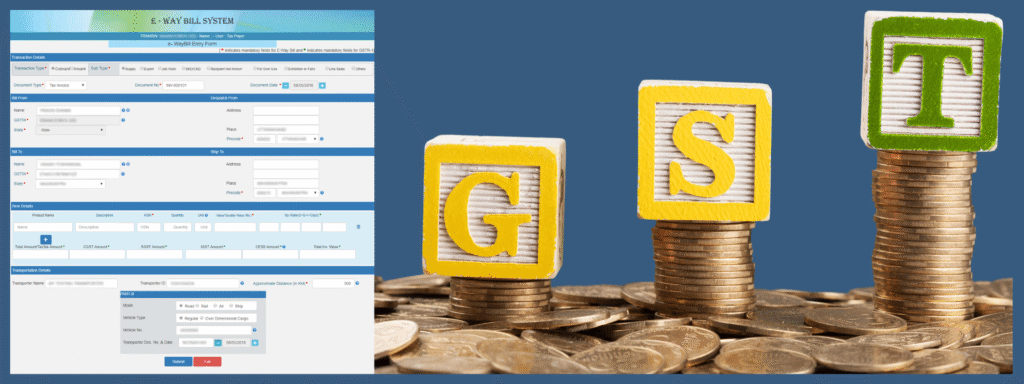
An E-Way Bill (Electronic Way Bill) is an electronically generated document required for the movement of goods under GST when the value of goods exceeds the prescribed limit. It contains details of the consignor, consignee, goods, and transporter and helps tax authorities track the movement of goods. The E-Way Bill is mandatory for both inter-state and intra-state movement, subject to state-specific rules.
When is an E-Way Bill Required?
An E-Way Bill must be generated when:
Goods value exceeds ₹50,000
Goods are moved for supply, job work, sales return, or transfer
Goods are transported by road, rail, air, or vessel
Movement occurs between registered persons, or from an unregistered person to a registered person
Even if the value is below ₹50,000, authorities may still require an E-Way Bill in certain cases.
Who Should Generate an E-Way Bill?
Registered Supplier – when goods are supplied
Registered Recipient – when goods are received from an unregistered supplier
Transporter – if neither supplier nor recipient generates it
Validity of an E-Way Bill
The validity depends on the distance travelled:
Up to 200 km – 1 day
For every additional 200 km – 1 extra day
Validity starts from the date and time of generation.
Key Details Required for E-Way Bill Generation
To generate an E-Way Bill, the following details are required:
GSTIN of supplier & recipient
Invoice or delivery challan number
Description of goods
HSN code
Value of goods
Transporter ID or vehicle number
Place of dispatch and delivery
Accurate details are essential to avoid rejection or penalties.
Latest E-Way Bill Updates (2025–26)
Here are some important developments businesses should be aware of:
Stricter compliance checks at checkpoints and during transit
Blocking of E-Way Bill generation for GST returns non-filers
Auto-population of invoice data from GST returns to reduce errors
Increased use of AI-based verification to identify mismatches
Higher penalties for incorrect vehicle numbers or expired E-Way Bills
Staying updated is critical to avoid business disruptions.
Common E-Way Bill Mistakes Businesses Must Avoid
Generating E-Way Bill with incorrect invoice details
Not updating vehicle number during transit changes
Transporting goods with expired E-Way Bill
Mismatch between invoice value and E-Way Bill value
Generating E-Way Bill without proper GST registration
Such errors can lead to penalties, detention of goods, and legal notices.
Penalty for Non-Compliance
Failure to generate or carry a valid E-Way Bill can result in:
Penalty of ₹10,000 or tax amount involved (whichever is higher)
Detention or seizure of goods and vehicle
Additional compliance scrutiny by tax authorities
How BusinessRights Helps with E-Way Bill Compliance
At BusinessRights, we support businesses with:
✔ E-Way Bill registration & setup
✔ Real-time E-Way Bill generation support
✔ GST return reconciliation with E-Way Bills
✔ Error correction & compliance guidance
✔ End-to-end GST compliance services
We ensure your goods move smoothly without compliance hurdles.
Conclusion
The E-Way Bill system plays a vital role in GST compliance and logistics management. With stricter monitoring and digital tracking in 2025–26, businesses must ensure accurate and timely E-Way Bill generation. Whether you’re a small trader or a growing enterprise, professional guidance can save time, money, and compliance stress. Contact BusinessRights for reliable GST & E-Way Bill compliance support.